 Indian Chamber of Commerce,
  The Bengal Chamber |
  IATA Authorized |
  National Skill Development Corporation |
  DGCA-Approved for Dangerous Goods Training (DGR) |
  Members of the Confederation of Indian Industry (CII) |
  Federation of Indian Chambers of Commerce and Industry
  Ministry of Education
 MoE's Innovation Cell
 Institution's Innovation Council
 AICTE Approved
 We Offer Student Credit Card (Authorized by The Government of West Bengal)

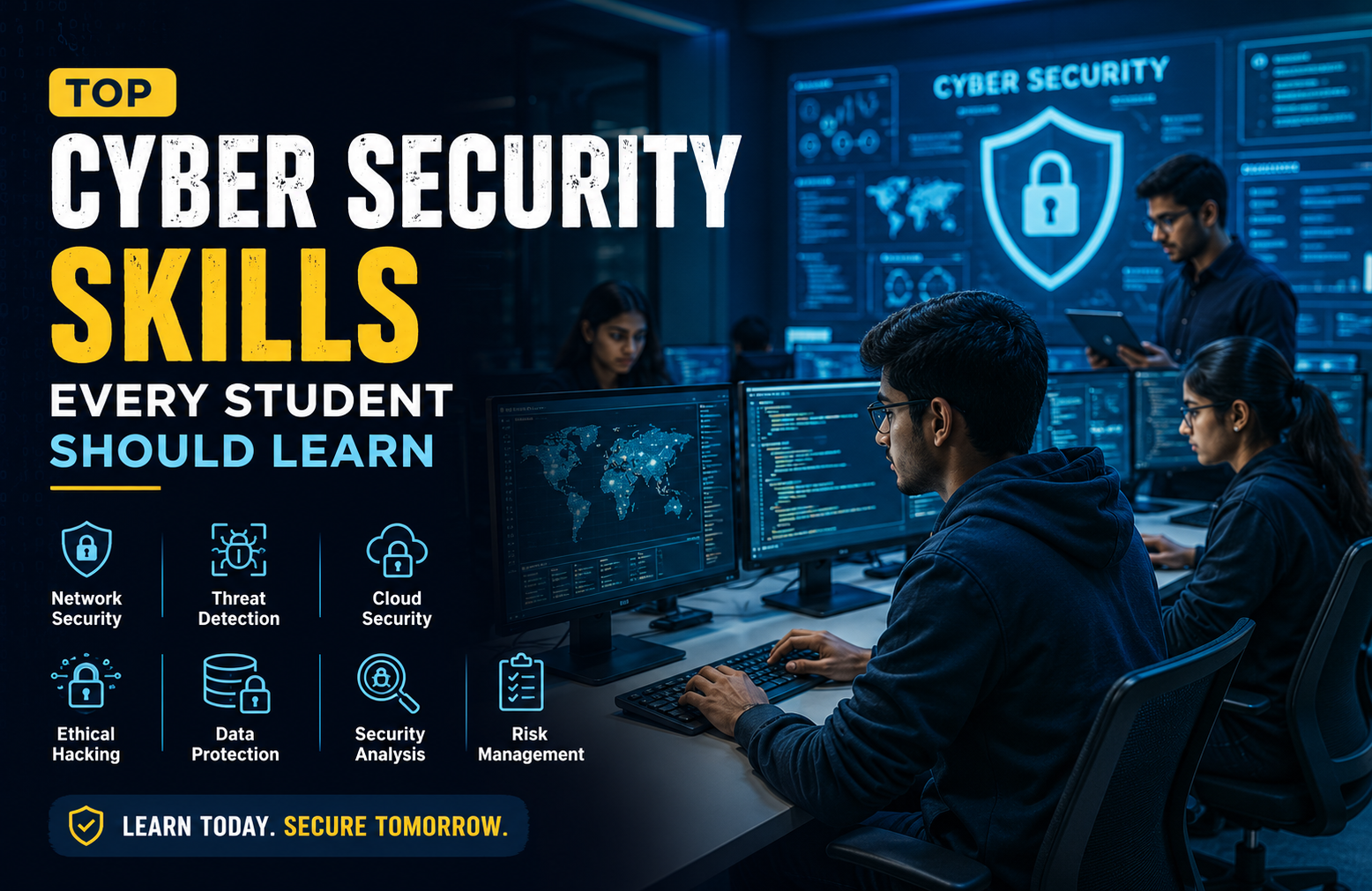
Technology has become a part of almost everything we do, from online banking and shopping to education and business. As our dependence on digital systems continues to grow, protecting them from cyber threats has become more important than ever.
Students who want to build a career in cyber security need more than an interest in technology. Developing the right skills early creates a strong foundation and prepares them to take on real-world challenges with confidence.
Here are some of the top cybersecurity skills every student should learn.
Understanding Computer Networks
A good cybersecurity professional needs to understand how computers communicate with each other. Learning about networks, IP addresses, routers, switches, and firewalls helps students understand where security risks can appear. This knowledge makes it easier to identify vulnerabilities and protect digital systems from unauthorized access.
Basic Programming Knowledge
Programming is a valuable skill in cybersecurity. Languages such as Python, Java, and C++ help students understand how software works and how attackers may exploit application weaknesses. Programming also supports tasks like automation, security testing, and data analysis, making daily work more efficient.
Ethical Hacking Fundamentals
Ethical hacking teaches students how to identify security weaknesses before cybercriminals can exploit them. By learning how attackers think and operate, future professionals become better prepared to protect organizations. Ethical hackers test systems in a legal and controlled manner and recommend improvements that strengthen security.
Problem-Solving Skills
Cybersecurity professionals face new challenges every day. Every incident requires careful observation, logical thinking, and the ability to identify the source of a problem. Students who enjoy solving puzzles and analyzing situations usually find this field both interesting and rewarding.
Knowledge of Operating Systems
Different organizations use different operating systems, including Windows, Linux, and macOS. Learning how these systems function helps students understand security settings, user permissions, file management, and system vulnerabilities. Linux, in particular, is widely used in cyber security environments and is a valuable platform to learn.
Network Security
Protecting computer networks is one of the core responsibilities in cybersecurity. Students should understand firewalls, virtual private networks (VPNs), intrusion detection systems, and secure network design. These concepts help prevent unauthorized users from gaining access to important information.
Digital Forensics
When a cyberattack takes place, businesses need experts who can investigate what happened. Digital forensics involves collecting, preserving, and analyzing digital evidence. Learning these skills allows students to understand how security incidents are examined and how valuable information can be recovered during investigations.
Risk Assessment
Every organization faces different security risks. Cybersecurity professionals evaluate possible threats, identify vulnerable areas, and recommend practical solutions. Students who develop risk assessment skills learn how to prioritize security measures and reduce the chances of successful cyberattacks.
Communication Skills
Technical knowledge is important, yet explaining security issues in simple language is equally valuable. Cyber security professionals regularly interact with managers, employees, and clients who may not have a technical background. Good communication helps everyone understand security practices and encourages safer digital habits across an organization.
Staying Updated
Cyber security continues to change as new technologies and attack methods emerge. Students should develop the habit of reading industry updates, participating in workshops, practicing through online labs, and learning new tools. Continuous learning helps professionals remain prepared for future challenges throughout their careers.
Students who want structured learning can consider pursuing a BSc Hons in Cyber Security. This three-year course combines theoretical knowledge with practical training in areas such as network security, ethical hacking, digital forensics, cyber laws, cryptography, cloud security, and incident response. Pursuing the programme from the best cyber security college in Kolkata can further enhance the learning experience through quality education, hands-on training, experienced faculty, and industry exposure. Practical sessions help students apply classroom concepts to real-world situations, giving them valuable experience before entering the industry.
This course also helps students build analytical thinking, technical expertise, and problem-solving abilities that employers value across many industries. Career opportunities include cyber security analyst, ethical hacker, information security specialist, penetration tester, network security engineer, security consultant, and digital forensics investigator.
Cyber security continues to create exciting opportunities for students who enjoy technology and solving complex challenges. Developing the right skills today can open doors to a rewarding career in cyber security tomorrow. Every new concept learned, every practical exercise completed, and every challenge solved adds confidence and prepares students to protect the digital world with knowledge and responsibility.